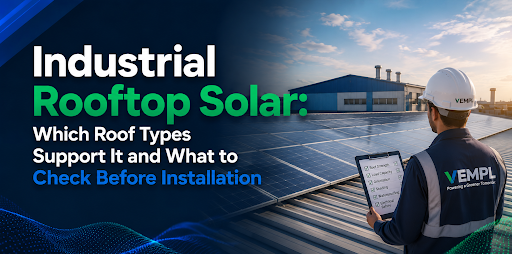
Industrial rooftops are excellent candidates for solar plants when the roof type, structure, and layout are evaluated carefully up front. Partnering with experienced solar EPC companies in Mumbai ensures these checks are handled methodically before any module is installed.
Roof Types and Suitability :
Most industrial sites have RCC (reinforced cement concrete) flat roofs or metal sheet roofs, including trapezoidal and standing seam profiles. Both can safely host rooftop solar when structural and waterproofing conditions are verified by qualified engineers.
RCC roofs often use ballasted or minimally penetrative mounting systems that rest on the slab with proper load distribution and drainage. Metal sheet roofs require lightweight, engineered structures that clamp seams to avoid excessive drilling and leakage risks.
Asbestos roofs are generally unsuitable because the sheets are brittle and hazardous to work on, so most experts recommend replacing them with metal sheets before considering solar. For such sites, a roof upgrade plus solar becomes a combined safety and energy project, rather than just a plant installation.
Structural, Roof Health and Layout Checks :
Structural load-bearing capacity must be checked for panel weight, mounting structures, cables, and live loads from maintenance teams, as well as local wind loads. This assessment reviews slabs, beams, columns or purlins and confirms that deflection and safety factors remain within code limits.
Roof condition checks cover cracks, seepage and waterproofing quality on RCC, and rusted sheets, loose fasteners or weak purlins on metal roofs. Any corrosion or leakage must be treated before installation to avoid accelerated deterioration under the solar array footprint.
Space utilisation and layout planning should allow clear walkways, safe access to inverters and junction boxes, and respect fragile zones or skylights. A thoughtful layout also supports cleaning, soiling control, and long-term operations and maintenance.
Orientation, Mounting and Electrical Integration :
Panel orientation and tilt should follow the sun path, not just the roof slope, with angles optimised for yearly yield through design simulations. Detailed shadow analysis must map parapets, nearby buildings, trees and rooftop equipment across seasons to avoid mismatch losses and hotspots.
On RCC roofs, non-penetrative ballasted structures reduce waterproofing risks when combined with good drainage and quality sealants at any connections. On metal roofs, carefully designed penetrative or clamp-based systems must balance uplift resistance with minimal impact on sheets and insulation.
Electrical integration covers correct string sizing, voltage window checks, cable sizing for acceptable losses, and robust earthing and lightning protection. A capable EPC (Engineering, Procurement and Construction) partner designs AC and DC protection, synchronises with the LT or HT system, and ensures compliance with safety standards.
Approvals, DISCOM and EPC Support :
Industrial rooftop projects require adherence to DISCOM (power distribution company) guidelines, net metering policies, and state regulations. Experienced solar panel providers prepare drawings, documentation and applications, and coordinate with utilities until commissioning and export billing are in place.
VEMC provides solar EPC services and offers expert guidance on solar installation, including engineering, procurement, commissioning, and net metering. Contact us at +91 8976951701, +91 9819907445, 022 43117133, or email marketing@vemc.co.in
Frequently Asked Questions (FAQs)
1. Can I install solar directly on an asbestos roof?
This is strongly discouraged because asbestos sheets are fragile, have poor load capacity, and pose health and safety risks when disturbed.
2. Who checks if my roof can take the solar load?
A qualified structural engineer evaluates drawings and performs site checks to verify that the roof and frame can safely handle added dead and wind loads.
3. Which is better for solar, RCC or metal sheet roofs?
Both work well when designed correctly, since RCC supports ballasted systems, and metal roofs provide large, unobstructed areas for lightweight mounting structures.
4. Why are tilt and shadow studies so important?
Incorrect tilt or unaddressed shading can cause chronic generation losses, mismatched strings and hotspots, which reduce plant performance and module life.