
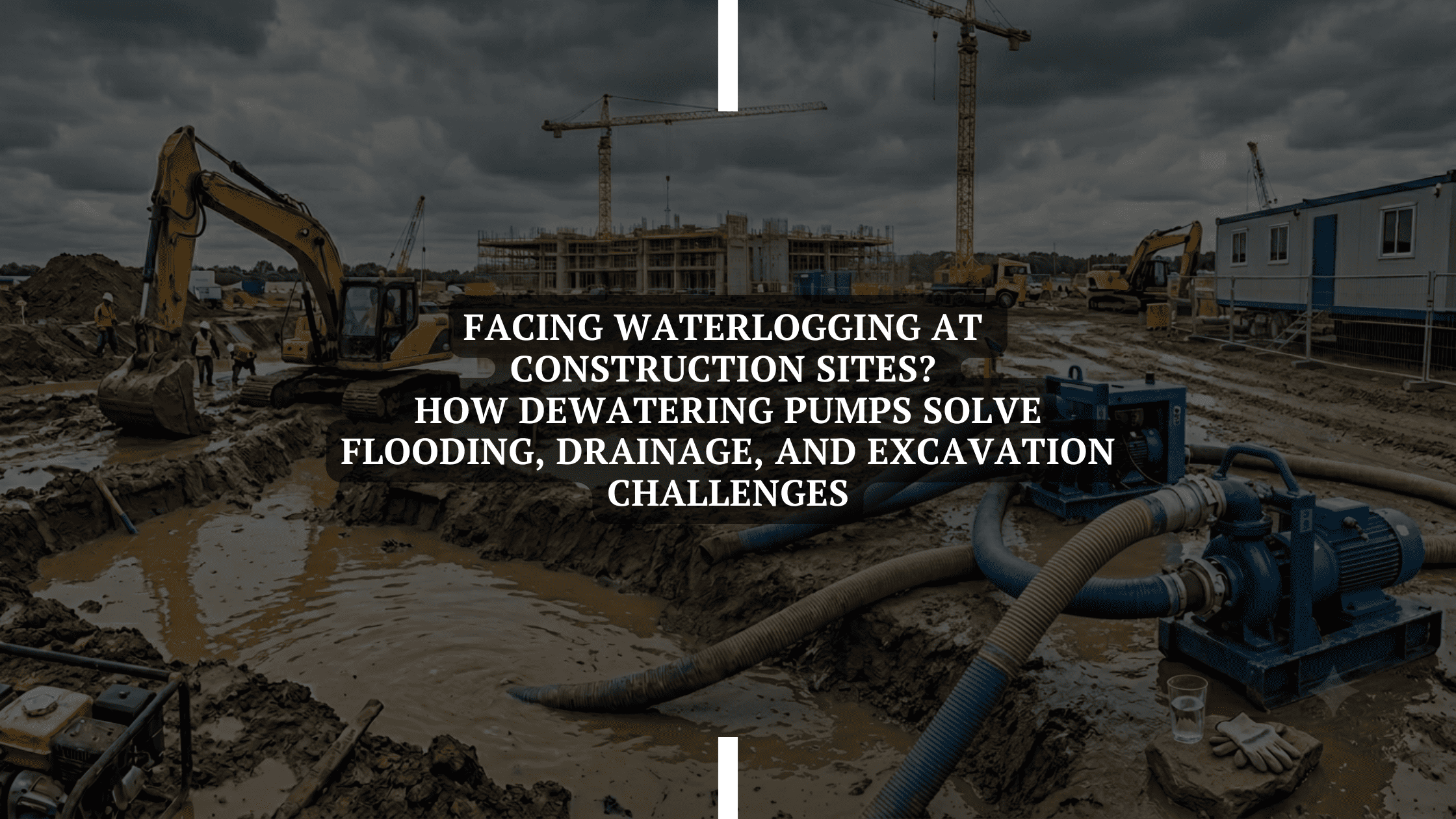
Waterlogging is one of the most disruptive problems on any construction site. Heavy rainfall, a high water table, or seepage from surrounding soil can flood an excavation overnight, stalling work and raising serious safety risks. Without a proper dewatering strategy in place, even a well-planned project can fall significantly behind schedule. Dewatering pumps are the most reliable way to keep sites dry, safe, and on track.
Why Construction Sites Flood
The common culprits are heavy rainfall, naturally high water tables, and lateral seepage through soil or rock. In urban areas like Mumbai, dense construction and poor site drainage compound the problem further. Left unmanaged, standing water delays concrete pours, corrodes reinforcement, and destabilises the ground, creating conditions that are unsafe for workers and equipment alike.
Types of Dewatering Pumps
The main options are submersible pumps, centrifugal pumps, and wellpoint systems. Submersible pumps operate under water and are ideal for flooded excavations and confined sumps. Centrifugal pumps are better suited where larger flow volumes need to be moved quickly. Wellpoint systems are used for deeper excavations, drawing groundwater upward through a series of connected suction points installed around the perimeter of the dig.
Getting the Pump Selection Right
Choose your pump based on the required flow rate, total head (the vertical height of water must be lifted), and site-specific conditions. Soil permeability, excavation depth, proximity to water bodies, and seasonal rainfall patterns all factor into the right specification. Getting this wrong means either an underpowered system that cannot keep pace with inflow or wasted capital on oversized equipment that cycles inefficiently.
Continuous vs Intermittent Dewatering
Sites with persistently high-water tables need pumps running continuously to maintain dry working conditions at the excavation face. Sites dealing mainly with surface storm water may only need intermittent operation triggered by rainfall events. Matching the duty cycle to actual site demand reduces mechanical wear, lowers energy consumption, and extends pump life.
Muddy and Slurry Conditions
Standard pumps are not built for slurry. Sediment-laden water and construction runoff can clog impellers and destroy seals within a short period of operation. Slurry-rated pumps with hardened, abrasion-resistant components are the right choice wherever mud, silt, and grit are part of the picture. Using the wrong pump in these conditions is a fast route to costly downtime.
Placement and Installation
Position pumps at the site’s lowest collection point, keep suction lines as short as possible, and route discharge well away from the excavation zone to prevent re-entry. A temporary sump dug at the base of the excavation helps consolidate water before pumping, reducing cycling frequency and protecting the unit from running dry.
Impact on Timelines and Safety
Unmanaged water pushes back excavation, foundation work, and concrete schedules, sometimes by weeks. It also raises the risk of slips, falls, and structural failures. A dependable dewatering setup is not optional on most sites; it directly protects both the project’s program and the workforce.
Maintenance and Reliability
Inspect inlets for blockages after every shift, monitor for unusual vibration or noise, and keep a standby pump available for critical phases of work. Following manufacturer service intervals and using genuine spares ensures consistent uptime and prevents minor issues from turning into major failures.
VEMPL, one of the most trusted industrial water pump dealers in Mumbai, offers a comprehensive range of industrial water pumps in Mumbai for dewatering, drainage, and excavation applications. Contact us at +91 8976951701, +91 9819907445, 022 43117133, or email marketing@vempl.co.in
Frequently Asked Questions (FAQs)
1. What is the best pump type for a flooded excavation?
A submersible pump is most practical for flooded pits and confined excavation spaces.
2. Can standard pumps handle muddy or slurry water?
No. Slurry conditions require hardened, abrasion-resistant pumps designed for sediment-laden water.
3. How do I determine the right pump size for my site?
Sizing depends on required flow rate, total head, and site conditions; consult a dewatering specialist.
4. Is continuous dewatering always necessary?
Not always. High water table sites need constant pumping; others require it only after significant rainfall.
5. How often should dewatering pumps be serviced?
Inspect after every shift and follow the manufacturer’s recommended service intervals.