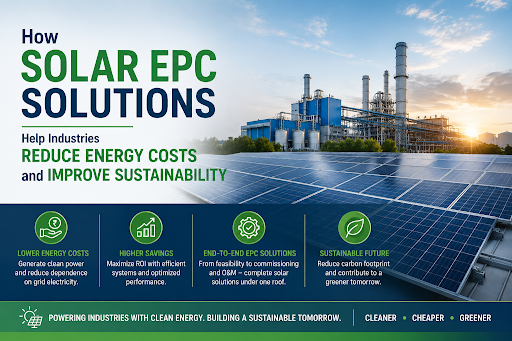
Rising electricity costs, increasing energy demand, and growing environmental regulations are prompting industries to rethink how they power their operations. For manufacturing plants, warehouses, commercial buildings, hospitals, educational institutions, and industrial facilities, electricity is one of the largest operating expenses.
Installing a solar power plant is no longer just about adopting renewable energy—it’s a strategic investment that helps businesses reduce electricity costs, improve energy independence, and meet long-term sustainability goals.
However, the success of a solar project depends largely on choosing the right implementation partner. Experienced Solar EPC companies in Mumbai provide end-to-end solutions, from system design and engineering to installation, commissioning, and long-term maintenance, ensuring the plant delivers maximum performance and return on investment (ROI).
In this guide, we’ll explore what Solar EPC companies do, how industrial solar solutions reduce energy costs, the sustainability benefits they offer, and the key factors to consider when selecting the right EPC partner.
What Is a Solar EPC Company?
EPC stands for Engineering, Procurement, and Construction.
A Solar EPC company is responsible for planning, designing, installing, testing, and commissioning a complete solar power system. Instead of coordinating with multiple vendors, businesses can work with a single EPC partner that manages the entire project from start to finish.
Leading Solar EPC companies in Mumbai provide turnkey solutions, ensuring every stage of the project is executed efficiently, safely, and in compliance with industry standards.
Services Offered by Solar EPC Companies
A professional Solar EPC company typically manages the complete project lifecycle.
1. Site Assessment
The project begins with a detailed evaluation of the site, including:
- Available rooftop or ground space
- Roof condition and structural strength
- Shadow analysis
- Electrical infrastructure
- Energy consumption patterns
This assessment helps determine the most suitable solar system capacity and layout.
2. Engineering and System Design
Every facility has unique energy requirements.
The engineering team designs a customized solar solution by considering:
- Daily and annual electricity consumption
- Roof orientation and tilt angle
- Module placement
- Inverter sizing
- Cable routing
- Safety systems
Proper engineering maximizes energy generation while ensuring long-term reliability.
3. Procurement of High-Quality Equipment
The quality of components directly affects the efficiency and lifespan of a solar plant.
A reputable EPC company sources reliable equipment, including:
- Solar PV modules
- String or central inverters
- Mounting structures
- DC and AC cables
- Protection devices
- Monitoring systems
Using quality components helps ensure consistent performance over the system’s lifetime.
4. Installation and Construction
Experienced installation teams carry out:
- Mounting structure installation
- Solar panel installation
- Electrical wiring
- Earthing and lightning protection
- Inverter installation
- Grid connectivity
Strict adherence to safety standards minimizes project risks and ensures high installation quality.
5. Testing and Commissioning
Before the plant becomes operational, engineers perform comprehensive testing to verify:
- Electrical safety
- System performance
- Inverter functionality
- Energy generation
- Protection systems
Commissioning ensures the plant is ready for reliable operation.
6. Operation and Maintenance (O&M)
Long-term performance depends on regular maintenance.
Most Solar EPC companies offer O&M services such as:
- Panel cleaning
- Preventive inspections
- Performance monitoring
- Fault diagnosis
- Inverter servicing
- Annual health checks
Routine maintenance helps maximize energy generation and extend system life.
How Solar EPC Solutions Reduce Energy Costs
One of the biggest reasons industries invest in solar energy is to reduce operating expenses.
A professionally designed solar power plant delivers several financial benefits.
Lower Electricity Bills
Solar panels generate electricity during daylight hours, reducing the amount of power purchased from the utility grid.
For industries with high daytime energy consumption, this can lead to significant savings on monthly electricity bills.
Reduced Peak Demand Charges
Many industrial electricity tariffs include demand charges based on peak power usage.
Solar generation helps reduce dependence on grid electricity during peak demand periods, lowering these charges.
Protection Against Rising Electricity Tariffs
Electricity prices generally increase over time.
Generating your own solar power helps stabilize energy costs and reduces exposure to future tariff hikes.
Faster Return on Investment (ROI)
Although installing a solar plant requires an initial investment, the long-term savings on electricity bills often result in an attractive return on investment.
The exact payback period depends on factors such as:
- System size
- Electricity consumption
- Local tariff structure
- Available government incentives
- Plant performance
Reduced Dependence on Grid Power
Generating electricity on-site improves energy security and reduces dependence on external power sources.
This is particularly beneficial for industries where uninterrupted operations are critical.
Sustainability Benefits of Solar EPC Solutions
Beyond financial savings, solar power supports an organization’s environmental and sustainability objectives.
Lower Carbon Emissions
Solar energy produces electricity without burning fossil fuels, helping reduce greenhouse gas emissions and the organization’s carbon footprint.
Support ESG Goals
Many organizations have Environmental, Social, and Governance (ESG) commitments.
Installing solar power demonstrates a tangible commitment to sustainable business practices.
Improved Environmental Compliance
Renewable energy adoption can help businesses align with environmental regulations and corporate sustainability initiatives.
Increased Renewable Energy Adoption
Solar power contributes to cleaner energy generation and supports the transition toward a more sustainable energy future.
Stronger Corporate Reputation
Customers, investors, and stakeholders increasingly value businesses that invest in renewable energy and environmentally responsible operations.
A visible commitment to sustainability can strengthen brand reputation and corporate credibility.
Industries That Benefit from Solar EPC Solutions
Solar power is suitable for a wide range of commercial and industrial applications, including:
- Manufacturing plants
- Industrial estates
- Warehouses
- Commercial office buildings
- Hospitals
- Hotels
- Educational institutions
- Shopping malls
- Logistics parks
- Food processing facilities
Each project is designed based on the facility’s energy consumption, available installation space, and operational requirements.
How to Choose the Right Solar EPC Company
Selecting the right EPC partner is one of the most important decisions in a solar project.
Consider the following factors before choosing among Solar EPC companies in Mumbai.
Industry Experience
Look for a company with proven experience in commercial and industrial solar installations.
Experienced EPC companies are better equipped to handle complex projects and unexpected site challenges.
Engineering Expertise
Strong engineering capabilities ensure:
- Accurate system sizing
- Maximum energy generation
- Reliable electrical design
- Long-term plant performance
Quality of Equipment
Ask about the brands and specifications of:
- Solar modules
- Inverters
- Mounting structures
- Protection systems
High-quality equipment generally offers better efficiency, reliability, and warranty support.
Safety Standards
Solar installations involve electrical and structural work.
Choose an EPC company that follows established safety procedures during design, installation, and commissioning.
Operation & Maintenance Services
A good EPC partner should continue supporting the plant after installation through preventive maintenance, inspections, and performance monitoring.
Performance Guarantees
Ask whether the company provides performance commitments or expected energy generation estimates based on engineering calculations.
Customer References and Project Portfolio
Review completed projects, customer testimonials, and case studies to understand the company’s experience and service quality.
Why the Lowest Price Isn’t Always the Best Choice
While project cost is an important consideration, selecting the lowest quotation may result in:
- Lower-quality equipment
- Poor engineering
- Reduced energy generation
- Higher maintenance costs
- Shorter equipment lifespan
A well-engineered solar plant often delivers greater long-term value through higher energy production, lower maintenance requirements, and improved reliability.
Best Practices for a Successful Solar Project
To maximize the benefits of your solar investment:
- Conduct a professional energy assessment.
- Select the appropriate system capacity.
- Use high-quality modules and inverters.
- Partner with an experienced Solar EPC company.
- Monitor plant performance regularly.
- Schedule preventive maintenance and panel cleaning.
- Plan for future expansion if energy demand is expected to grow.
Following these best practices helps ensure consistent performance and maximum return on investment.
Frequently Asked Questions (FAQs)
1. What does a Solar EPC company do?
A Solar EPC company manages the complete lifecycle of a solar project, including site assessment, engineering, procurement, installation, testing, commissioning, and ongoing operation and maintenance.
2. How long does an industrial solar project take?
Project timelines vary depending on system size, approvals, and site conditions. Many commercial rooftop solar installations are completed within a few weeks to a few months.
3. What is the lifespan of a solar power plant?
Most solar power systems are designed to operate efficiently for 25 years or more with proper maintenance and periodic inspections.
4. Do solar plants require regular maintenance?
Yes. Regular panel cleaning, electrical inspections, performance monitoring, and preventive maintenance help maintain optimal energy generation and system reliability.
5. Why should industries choose experienced Solar EPC companies in Mumbai?
Experienced Solar EPC companies provide professional engineering, quality equipment selection, safe installation practices, reliable project execution, and long-term maintenance support, helping maximize energy generation and improve return on investment.
6. Can solar power meet all of an industry’s electricity needs?
The contribution of solar power depends on available installation space, energy consumption, and system size. Many industries use solar energy to offset a significant portion of their daytime electricity demand while continuing to use grid power as needed.
Conclusion
Solar energy has evolved from being an environmental initiative to becoming a strategic business investment for commercial and industrial organizations. A professionally designed solar power system can significantly reduce electricity costs, improve energy independence, protect businesses from rising utility tariffs, and support long-term sustainability goals.
However, achieving these benefits requires more than installing solar panels. It requires careful planning, sound engineering, quality equipment, and reliable long-term support.
At Vijay Engineering & Machinery Co. (VEMPL), we provide end-to-end Solar EPC solutions for commercial and industrial customers. From feasibility studies and system design to installation, commissioning, and Operation & Maintenance (O&M), our team delivers customized solar solutions that maximize energy generation, reduce operating costs, and help organizations build a more sustainable future.