
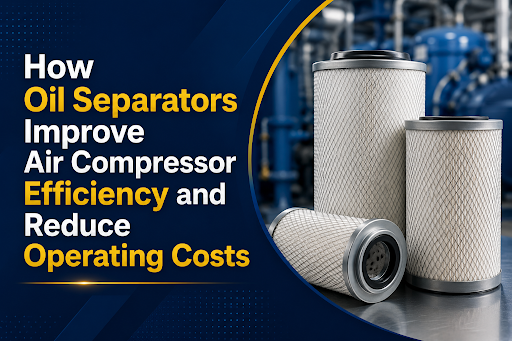
Compressed air is often called the fourth utility in industrial facilities because of its critical role in manufacturing, processing, packaging, and automation systems. While compressors receive most of the attention, several internal components significantly influence system performance and efficiency. One of the most important among them is the oil separator for compressor.
In oil-injected screw compressors, the oil separator plays a vital role in maintaining air quality, reducing energy consumption, minimizing oil loss, and extending equipment life. A poorly performing separator can increase operating costs, contaminate compressed air, and lead to premature compressor failures.
This article explains how an oil separator for a compressor works, why it is critical for efficient operation, and how proper maintenance can help reduce long-term operating costs.
What Is an Oil Separator for a Compressor?
An oil separator for a compressor is a specialized filtration component used in oil-lubricated screw air compressors. During the compression process, lubricating oil mixes with compressed air inside the airend.
The primary function of the separator is to remove oil from the compressed air stream before the air moves to downstream equipment.
The separated oil is then returned to the compressor lubrication circuit for reuse.
A typical air compressor oil separator performs three important functions:
- Separates oil from compressed air
- Maintains low oil carryover
- Returns recovered oil to the lubrication system
Modern separator elements can achieve very low oil carryover levels, helping maintain clean compressed air while minimizing lubricant losses.
How Does an Oil Separator Work?
Understanding how an oil separator for compressor functions helps explain its impact on efficiency.
The separation process generally occurs in multiple stages:
Primary Separation
As compressed air and oil enter the separator vessel, the sudden reduction in velocity causes larger oil droplets to fall out of suspension.
Secondary Separation
Internal baffles and directional changes further separate oil particles from the compressed air stream.
Fine Filtration
The remaining oil mist passes through the separator element, where microscopic fibers capture fine oil particles through coalescence.
The collected oil droplets combine into larger droplets and return to the compressor sump through a scavenging line.
This multi-stage process ensures efficient oil recovery while delivering cleaner compressed air.
How an Oil Separator Improves Air Compressor Efficiency
Reduces Pressure Drop
One of the biggest contributors to compressor energy consumption is pressure loss within the system.
A high-quality oil separator for compressor is designed to maintain minimal pressure drop while effectively separating oil.
When separator elements become clogged or deteriorated:
- Compressor workload increases
- Energy consumption rises
- Air delivery efficiency decreases
Even a small increase in pressure drop can result in higher electricity costs over time.
Maintaining a clean separator helps ensure that the compressor operates at optimal efficiency.
Minimizes Oil Carryover
Excessive oil carryover is a common problem in compressed air systems.
A properly functioning oil separator for compressor reduces the amount of oil leaving the compressor and entering downstream equipment.
Benefits include:
- Lower lubricant consumption
- Reduced contamination risks
- Cleaner compressed air
- Lower maintenance costs
By recovering and recirculating oil efficiently, the compressor requires fewer oil top-ups and operates more economically.
How Oil Separators Reduce Operating Costs
Lower Lubricant Expenses
Lubricating oil is a recurring operating expense for every oil-injected compressor.
An efficient oil separator for compressor helps recover a significant portion of the oil used during compression and returns it to the system.
This reduces:
- Oil replacement frequency
- Lubricant procurement costs
- Waste oil disposal requirements
For facilities operating multiple compressors, these savings can become substantial over a year.
Reduced Maintenance Costs
When oil contamination reaches downstream equipment, it can create numerous operational issues.
Affected components may include:
- Air dryers
- Filters
- Pneumatic tools
- Control valves
- Instrumentation systems
A quality air compressor oil separator helps keep the compressed air stream cleaner, reducing maintenance requirements throughout the entire compressed air system.
Improved Energy Savings
Energy accounts for a significant percentage of compressor lifecycle costs.
A properly functioning separator helps:
- Maintain efficient airflow
- Reduce pressure losses
- Improve compressor performance
As a result, facilities can achieve lower electricity consumption and improved system efficiency.
Extending Compressor Life Through Proper Oil Separation
The oil separator does more than improve efficiency—it also protects critical compressor components.
Maintains Proper Lubrication
Recovered oil is continuously returned to the lubrication circuit.
This ensures adequate lubrication for:
- Bearings
- Rotors
- Gears
- Internal moving components
Proper lubrication reduces friction, heat generation, and mechanical wear.
Reduces Internal Contamination
Effective oil management helps keep internal compressor components cleaner.
Reduced contamination can result in:
- Lower wear rates
- Longer service intervals
- Improved reliability
- Extended equipment lifespan
For industrial facilities focused on asset longevity, maintaining the oil separator is an important part of compressor maintenance planning.
Importance of Air Quality
Compressed air quality is especially important in industries such as:
- Pharmaceuticals
- Food and beverage
- Electronics manufacturing
- Automotive production
- Packaging operations
A poorly performing oil separator for compressor can introduce oil contamination into production processes.
Potential consequences include:
- Product rejection
- Equipment damage
- Quality control failures
- Increased maintenance costs
Using high-quality separator elements helps maintain cleaner compressed air and protect sensitive applications.
Why Genuine Oil Separators Matter
When replacement time arrives, some facilities choose low-cost alternatives.
However, genuine separator elements are generally engineered specifically for the compressor model and operating conditions.
Benefits of genuine separator elements include:
- Consistent separation efficiency
- Lower pressure drop
- Longer service life
- Better reliability
- Improved compressor protection
Choosing quality compressor spare parts often results in lower lifecycle costs despite a higher initial purchase price.
Maintenance Tips for Oil Separators
To maximize performance and efficiency, operators should follow a preventive maintenance program.
Recommended practices include:
- Monitor pressure differential across the separator
- Inspect for excessive oil carryover
- Follow manufacturer replacement intervals
- Use recommended compressor lubricants
- Check scavenging lines for blockages
- Install genuine replacement elements
Routine inspection helps identify problems before they impact compressor performance or production operations.
Conclusion
An oil separator for compressor is a small component with a significant impact on compressor efficiency, air quality, maintenance costs, and equipment reliability. By effectively separating oil from compressed air and returning it to the lubrication circuit, the separator helps reduce energy consumption, lower operating expenses, improve compressed air quality, and extend compressor life.
For industrial facilities looking to optimize their compressed air systems, regular inspection and timely replacement of the oil separator should be considered a critical part of any compressor maintenance strategy. Investing in a high-quality separator element today can help deliver measurable savings and improved system performance for years to come. If you’re looking for reliable oil separator solutions and expert support for your compressed air systems, VEMPL is a trusted partner, offering high-quality products and comprehensive services to maximize compressor performance and operational efficiency.