
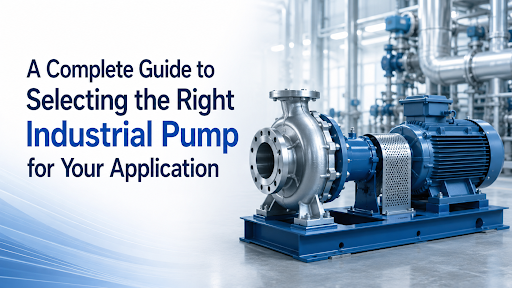
Industrial pumps are the driving force behind countless industrial processes. From manufacturing plants and water treatment facilities to HVAC systems, chemical processing units, power plants, and commercial buildings, pumps play a critical role in moving water, chemicals, and other fluids efficiently and reliably.
However, selecting the right industrial pump is not as simple as choosing a model with the required capacity. Every application has unique hydraulic, operational, and environmental requirements. An incorrectly selected pump can result in excessive energy consumption, frequent breakdowns, higher maintenance costs, and costly production downtime.
Whether you’re designing a new pumping system, upgrading existing equipment, or expanding your facility, partnering with experienced industrial pump suppliers ensures you select the most suitable solution for your application while maximizing efficiency and long-term reliability.
In this comprehensive guide, we’ll walk you through the key factors to consider when selecting an industrial pump, the different pump types available, and best practices for achieving optimal system performance.
Why Choosing the Right Industrial Pump Matters
The right pump does much more than move fluid from one location to another. It directly affects your plant’s productivity, energy consumption, maintenance costs, and operational reliability.
A properly selected industrial pump helps:
- Improve process efficiency
- Reduce electricity consumption
- Minimize equipment downtime
- Extend pump service life
- Lower maintenance costs
- Increase overall system reliability
- Maximize return on investment (ROI)
Conversely, an improperly selected pump may operate inefficiently, consume excess power, and require frequent repairs.
Step 1: Understand Your Application Requirements
Before selecting a pump, it’s essential to understand the operating conditions of your system.
Every application is different, and the pump should be selected based on detailed hydraulic calculations rather than assumptions.
Key factors to evaluate include:
- Required flow rate (LPM or m³/hr)
- Total Dynamic Head (TDH)
- Operating pressure
- Fluid type
- Fluid temperature
- Fluid viscosity
- Presence of solids or abrasive particles
- Corrosive or chemical properties
- Continuous or intermittent operation
- Installation environment
Clearly defining these requirements helps ensure the selected pump delivers reliable and efficient performance.
Step 2: Calculate Flow Rate and Total Dynamic Head (TDH)
Two of the most important parameters in pump selection are Flow Rate and Total Dynamic Head (TDH).
Flow Rate
Flow rate refers to the volume of fluid the pump must deliver within a specific period.
It depends on:
- Process requirements
- Building demand
- Production capacity
- Water consumption
Total Dynamic Head (TDH)
TDH represents the total pressure the pump must overcome.
It includes:
- Static head
- Friction losses in piping
- Valve losses
- Elevation differences
- Required discharge pressure
Accurate hydraulic calculations prevent both under-sizing and over-sizing of pumps.
Step 3: Understand the Fluid Characteristics
The type of fluid being pumped significantly influences pump selection.
Important fluid characteristics include:
- Clean water
- Wastewater
- Chemicals
- Slurry
- Oils
- Hot water
- Corrosive liquids
- Abrasive fluids
The fluid determines the appropriate:
- Pump type
- Impeller design
- Mechanical seal
- Material of construction
Using unsuitable materials can lead to corrosion, erosion, and premature failure.
Step 4: Choose the Right Pump Type
Different applications require different pump designs.
Below are some of the most commonly used industrial pumps.
End Suction Pumps
End suction pumps are compact, economical, and suitable for general water transfer applications.
Common applications include:
- Commercial buildings
- HVAC systems
- Water supply
- Irrigation
Horizontal Split Case Pumps
Horizontal split casing pumps are designed for high-flow applications requiring excellent efficiency and easy maintenance.
Typical applications include:
- Municipal water supply
- Industrial water transfer
- HVAC chilled water systems
- Fire protection systems
Vertical Inline Pumps
Vertical inline pumps save floor space while providing efficient circulation.
Commonly used in:
- HVAC systems
- Commercial buildings
- District cooling systems
Multistage Pumps
Multistage pumps generate high pressure using multiple impellers.
Suitable for:
- Boiler feed systems
- High-rise buildings
- Reverse osmosis plants
- Pressure boosting systems
Process Pumps
Process pumps are designed for demanding industrial applications involving chemicals and corrosive fluids.
Industries include:
- Chemical processing
- Pharmaceuticals
- Petrochemicals
- Food processing
Sewage Pumps
Sewage pumps handle wastewater containing solids and suspended particles.
Applications include:
- Sewage treatment plants
- Industrial wastewater systems
- Municipal drainage
Firefighting Pumps
Fire pumps supply water to hydrants and sprinkler systems during emergencies.
Common configurations include:
- End suction fire pumps
- Horizontal split case pumps
- Vertical turbine pumps
- Diesel engine-driven fire pumps
Step 5: Prioritize Energy Efficiency
Electricity accounts for the largest portion of a pump’s lifecycle cost.
Choosing an energy-efficient pump can significantly reduce operating expenses.
Look for pumps that:
- Operate close to the Best Efficiency Point (BEP)
- Use IE3 or IE4 premium-efficiency motors
- Support Variable Frequency Drives (VFDs)
- Deliver high hydraulic efficiency
Although efficient pumps may have a higher initial cost, they often generate substantial savings throughout their operational life.
Step 6: Evaluate Material of Construction
The pump’s material should match the application.
Common materials include:
| Material | Typical Applications |
| Cast Iron | Clean water and general industrial applications |
| Ductile Iron | Heavy-duty industrial services |
| Stainless Steel | Corrosive fluids and hygienic applications |
| Bronze | Marine and seawater applications |
| Special Alloys | Chemical and highly corrosive environments |
Selecting the correct material extends pump life while reducing maintenance costs.
Step 7: Consider Installation Conditions
Pump performance also depends on proper installation.
Before selecting a pump, consider:
- Available installation space
- Foundation strength
- Suction piping layout
- Discharge piping arrangement
- Accessibility for maintenance
- Ambient temperature
- Ventilation
Good installation practices improve reliability and simplify future maintenance.
Step 8: Evaluate Maintenance Requirements
An industrial pump should be easy to inspect and maintain.
Consider features such as:
- Easy access to wearing parts
- Replaceable mechanical seals
- Readily available bearings
- Genuine spare parts availability
- Maintenance-friendly design
- Strong service network
Routine maintenance becomes faster and less expensive when pumps are designed for easy servicing.
Step 9: Consider Automation and Smart Monitoring
Modern pumping systems increasingly incorporate automation technologies that improve operational efficiency.
Advanced pump systems may include:
- PLC-based control panels
- Variable Frequency Drives (VFDs)
- SCADA integration
- Remote monitoring
- Pressure and flow sensors
- Alarm notifications
- Energy monitoring
These features support predictive maintenance and reduce unexpected failures.
Step 10: Partner with an Experienced Industrial Pump Supplier
Choosing the right supplier is just as important as choosing the right pump.
Experienced industrial pump suppliers offer comprehensive support throughout the project lifecycle.
Their services typically include:
- Pump sizing and selection
- Hydraulic calculations
- System design assistance
- Equipment recommendations
- Installation guidance
- Commissioning
- Preventive maintenance
- Genuine spare parts
- Performance testing
- After-sales technical support
A knowledgeable supplier helps ensure the pump continues to perform efficiently for years.
Best Practices for Selecting an Industrial Pump
To maximize efficiency and reliability:
- Understand your application thoroughly.
- Perform accurate hydraulic calculations.
- Choose the appropriate pump type.
- Select materials compatible with the pumped fluid.
- Prioritize energy-efficient equipment.
- Consider future expansion requirements.
- Plan for preventive maintenance.
- Work with experienced industrial pump suppliers.
These best practices help reduce operating costs while improving system performance.
Common Mistakes to Avoid
Avoid these common pump selection errors:
- Selecting a pump based only on price.
- Ignoring Total Dynamic Head (TDH).
- Oversizing or undersizing the pump.
- Using unsuitable materials for corrosive fluids.
- Ignoring maintenance requirements.
- Overlooking future system expansion.
- Purchasing without professional engineering support.
Avoiding these mistakes improves long-term reliability and lowers lifecycle costs.
Industries That Use Industrial Pumps
Industrial pumps are widely used across numerous sectors, including:
- Manufacturing industries
- Water and wastewater treatment plants
- Chemical processing facilities
- Pharmaceutical industries
- Food and beverage plants
- Commercial buildings
- Hotels and hospitals
- HVAC systems
- Fire protection systems
- Oil and gas facilities
- Power generation plants
- Infrastructure projects
Each industry requires pumps specifically engineered for its operational demands.
Frequently Asked Questions (FAQs)
1. How do I choose the right industrial pump?
The right pump depends on several factors, including required flow rate, Total Dynamic Head (TDH), fluid characteristics, operating temperature, pressure, installation environment, and maintenance requirements. Consulting experienced industrial pump suppliers helps ensure accurate pump selection.
2. What is the most important factor when selecting an industrial pump?
Accurate hydraulic calculations are the foundation of proper pump selection. Choosing the correct flow rate and Total Dynamic Head (TDH) ensures the pump operates efficiently and reliably.
3. Why is pump efficiency important?
A high-efficiency pump consumes less electricity, reduces operating costs, minimizes wear on components, and delivers better long-term performance.
4. Should I install a Variable Frequency Drive (VFD)?
If your application experiences varying flow or pressure demands, a Variable Frequency Drive (VFD) can improve energy efficiency, provide better process control, and extend pump life by adjusting motor speed to match system requirements.
5. Why should I work with experienced industrial pump suppliers?
Experienced industrial pump suppliers provide expert engineering, pump sizing, system design, installation support, genuine spare parts, preventive maintenance, and after-sales service. Their expertise helps ensure reliable performance and lower lifecycle costs.
Conclusion
Selecting the right industrial pump is a critical decision that affects the efficiency, reliability, and long-term operating costs of your entire pumping system. Beyond flow rate and pressure, factors such as fluid characteristics, pump type, material selection, energy efficiency, maintenance requirements, and supplier expertise all play an important role in achieving optimal performance.
Partnering with experienced industrial pump suppliers ensures that your pumping system is engineered to meet your application’s specific requirements while delivering maximum efficiency, reliability, and return on investment.
At Vijay Engineering & Machinery Co. (VEMPL), we offer a comprehensive range of industrial pumping solutions for water supply, HVAC, firefighting, process industries, sewage systems, and infrastructure projects. Our experienced team provides application engineering, pump selection, installation support, commissioning, preventive maintenance, and after-sales service to help customers achieve dependable performance and long-term operational success.