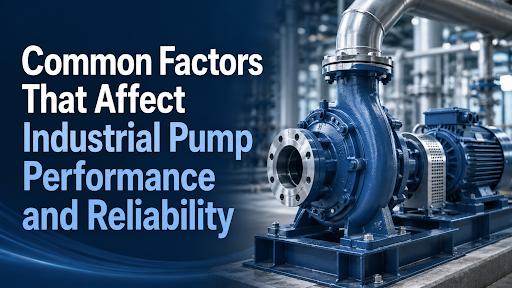
Industrial pumps play a vital role in manufacturing plants, water treatment facilities, HVAC systems, power plants, chemical industries, commercial buildings, and infrastructure projects. They are designed to operate continuously and efficiently, often under demanding conditions. However, even the most robust pump can experience reduced performance or unexpected failures if critical operating factors are overlooked.
Poor pump performance not only increases energy consumption but also leads to higher maintenance costs, unplanned downtime, and reduced productivity. Understanding the common factors that affect pump reliability allows facility managers and maintenance teams to take proactive measures that improve efficiency and extend equipment life.
If you’re searching for pump manufacturers near me, it’s important to choose a supplier that offers not only high-quality pumps but also expert engineering support, preventive maintenance services, and dependable after-sales assistance.
In this guide, we’ll explore the key factors that influence industrial pump performance and reliability, along with best practices to maximize pump lifespan and operational efficiency.
Why Pump Performance and Reliability Matter
An industrial pump is often at the heart of a critical process. Any reduction in its performance can impact production, increase operating costs, and disrupt business operations.
A reliable pumping system helps:
- Maintain uninterrupted operations
- Reduce energy consumption
- Lower maintenance costs
- Extend equipment lifespan
- Improve process efficiency
- Minimize unplanned downtime
- Increase return on investment (ROI)
By identifying and addressing potential issues early, businesses can significantly improve the reliability of their pumping systems.
Common Factors That Affect Industrial Pump Performance
1. Incorrect Pump Selection
One of the leading causes of poor pump performance is selecting the wrong pump for the application.
Every pumping system has unique requirements based on:
- Flow rate
- Total Dynamic Head (TDH)
- Fluid characteristics
- Operating pressure
- Temperature
- Duty cycle
Selecting an oversized or undersized pump can result in:
- Reduced efficiency
- Higher electricity consumption
- Excessive vibration
- Frequent breakdowns
- Increased wear on components
- Shortened equipment life
A properly engineered pump selection ensures the pump operates close to its Best Efficiency Point (BEP), maximizing performance and minimizing operating costs.
2. Poor Installation Practices
Even the highest-quality pump cannot perform efficiently if it is installed incorrectly.
Common installation issues include:
- Pipe strain on suction or discharge lines
- Improper shaft alignment
- Weak or uneven foundations
- Air leakage in suction piping
- Incorrect pipe sizing
- Inadequate support for piping
Poor installation can lead to excessive vibration, bearing failures, seal leakage, and reduced pump efficiency.
Following manufacturer installation guidelines is essential for long-term reliability.
3. Cavitation
Cavitation is one of the most damaging conditions affecting centrifugal pumps.
It occurs when the available Net Positive Suction Head (NPSH) is lower than the pump’s required NPSH, causing vapor bubbles to form and collapse inside the pump.
Common symptoms of cavitation include:
- Loud knocking or rattling noises
- Excessive vibration
- Reduced flow rate
- Loss of pressure
- Impeller erosion
- Premature pump failure
Preventing cavitation requires proper system design, adequate suction conditions, and correct pump selection.
4. Operating Away from the Best Efficiency Point (BEP)
Every pump is designed to perform most efficiently within a specific operating range known as the Best Efficiency Point (BEP).
Operating too far above or below this point can cause:
- Increased energy consumption
- Higher vibration levels
- Seal failures
- Bearing wear
- Shaft deflection
- Reduced service life
Matching the pump to actual operating conditions helps maintain maximum efficiency.
5. Poor Water or Fluid Quality
The characteristics of the pumped fluid significantly affect pump performance.
Potential challenges include:
- Suspended solids
- Abrasive particles
- Corrosive chemicals
- High temperatures
- High viscosity
- Scale-forming minerals
Using unsuitable materials of construction can accelerate corrosion and wear.
Selecting the correct materials for the casing, impeller, shaft, and mechanical seals improves durability and reliability.
6. Lack of Preventive Maintenance
Routine maintenance is essential for keeping industrial pumps operating efficiently.
Ignoring preventive maintenance often leads to unexpected failures and costly repairs.
Recommended maintenance activities include:
- Bearing inspection
- Lubrication
- Mechanical seal inspection
- Shaft alignment checks
- Impeller inspection
- Coupling inspection
- Vibration monitoring
- Performance testing
A preventive maintenance program helps identify issues before they become major failures.
7. Improper Lubrication
Bearings are among the most critical components of a pump.
Using incorrect lubricants, over-lubricating, or failing to lubricate bearings properly can cause:
- Bearing overheating
- Increased friction
- Premature bearing failure
- Excessive vibration
Always follow the manufacturer’s lubrication recommendations regarding lubricant type and maintenance intervals.
8. Seal and Bearing Wear
Mechanical seals and bearings experience continuous wear during operation.
Common causes of premature wear include:
- Misalignment
- Dry running
- Contaminated lubricant
- Excessive vibration
- Poor installation
Regular inspection and timely replacement of worn components help prevent larger failures.
9. Electrical Issues
Motor-related electrical problems can directly impact pump performance.
Common electrical issues include:
- Voltage imbalance
- Phase failure
- Overloading
- Incorrect motor sizing
- Loose electrical connections
Using properly designed motor protection systems and regularly inspecting electrical components improves overall system reliability.
10. Inadequate System Monitoring
Without proper monitoring, developing issues often go unnoticed until a breakdown occurs.
Modern monitoring systems can track:
- Flow rate
- Pressure
- Temperature
- Vibration
- Motor current
- Running hours
- Energy consumption
Real-time monitoring enables predictive maintenance and reduces unexpected downtime.
Best Practices to Improve Pump Performance and Reliability
To maximize the performance of industrial pumps:
- Select the correct pump based on hydraulic calculations.
- Operate the pump near its Best Efficiency Point (BEP).
- Ensure proper installation and alignment.
- Prevent cavitation through good suction design.
- Use materials compatible with the pumped fluid.
- Follow a preventive maintenance schedule.
- Monitor vibration and performance regularly.
- Inspect seals, bearings, and couplings periodically.
- Use energy-efficient motors and Variable Frequency Drives (VFDs) where appropriate.
- Replace worn components with genuine spare parts.
Following these practices significantly improves equipment reliability and reduces lifecycle costs.
Why Choosing the Right Pump Manufacturer Matters
When searching for pump manufacturers near me, evaluating suppliers based only on price can lead to higher long-term costs.
A reliable manufacturer provides much more than just equipment.
Look for a partner that offers:
- Application engineering support
- Pump selection assistance
- Customized solutions
- Installation guidance
- Commissioning support
- Genuine spare parts
- Preventive maintenance services
- Performance testing
- Energy-efficient pumping solutions
- Responsive after-sales service
An experienced manufacturer helps ensure the pump operates efficiently throughout its service life.
Common Mistakes to Avoid
Avoid these common mistakes that reduce pump performance:
- Selecting the wrong pump size
- Ignoring hydraulic calculations
- Operating continuously outside the BEP
- Poor installation practices
- Delaying preventive maintenance
- Using incompatible materials for corrosive fluids
- Ignoring vibration or unusual noises
- Purchasing non-genuine spare parts
- Choosing suppliers based only on the lowest price
Addressing these issues early helps avoid costly repairs and production losses.
Frequently Asked Questions (FAQs)
1. What is the most common cause of industrial pump failure?
Incorrect pump selection is one of the most common causes of pump failure. Selecting a pump that does not match the required flow rate, pressure, or fluid characteristics can lead to poor efficiency, increased wear, and frequent breakdowns.
2. What is cavitation, and why is it harmful?
Cavitation occurs when vapor bubbles form and collapse inside the pump due to insufficient suction pressure. It can cause noise, vibration, impeller damage, reduced performance, and premature pump failure.
3. How often should industrial pumps be maintained?
Maintenance frequency depends on the application and operating conditions. Regular inspections, lubrication, seal checks, alignment verification, and performance monitoring should be carried out according to the manufacturer’s recommendations and the facility’s maintenance schedule.
4. How can energy consumption be reduced in pumping systems?
Energy consumption can be reduced by selecting the correct pump size, operating near the Best Efficiency Point (BEP), using energy-efficient motors, installing Variable Frequency Drives (VFDs), and performing regular maintenance.
5. Why should I choose an experienced pump manufacturer?
Experienced pump manufacturers provide expert engineering, proper pump selection, quality products, genuine spare parts, technical support, and dependable after-sales service, helping maximize equipment reliability and reduce operating costs.
Conclusion
The performance and reliability of an industrial pump depend on much more than the quality of the equipment itself. Correct pump selection, proper installation, efficient operation, preventive maintenance, and continuous monitoring all play a critical role in ensuring dependable performance and minimizing lifecycle costs.
By understanding common causes of pump failures—such as incorrect sizing, cavitation, poor installation, inadequate maintenance, and unsuitable operating conditions—businesses can take proactive steps to improve efficiency, reduce downtime, and extend equipment life.
At Vijay Engineering & Machinery Co. (VEMPL), we provide high-quality pumping solutions backed by expert engineering, system selection, installation support, preventive maintenance, and genuine spare parts. Whether you need pumps for industrial processes, HVAC, water supply, fire protection, or infrastructure projects, our experienced team helps you choose solutions that deliver reliable performance, lower operating costs, and long-term value.