
Selecting the right pump is crucial for industries that depend on the continuous movement of large volumes of water. Whether it’s a manufacturing plant, HVAC system, municipal water supply, power plant, or water treatment facility, the efficiency and reliability of the pumping system directly impact operational performance, energy consumption, and maintenance costs.
Among the various pump types available, horizontal split casing pumps are widely recognized for their ability to handle high flow rates with excellent efficiency and reliability. Their robust construction, easy maintenance, and long service life make them the preferred choice for demanding industrial and commercial applications.
However, choosing the right horizontal split casing pumps in Mumbai involves more than simply matching flow and pressure requirements. Factors such as system design, fluid characteristics, pump efficiency, motor selection, and after-sales support all influence long-term performance and lifecycle costs.
This guide explains everything you need to know before selecting a horizontal split casing pump for your facility.
What Is a Horizontal Split Casing Pump?
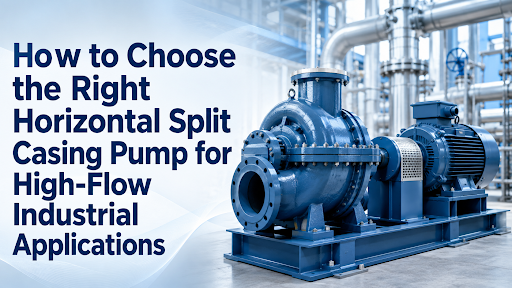
A horizontal split casing pump is a single-stage centrifugal pump with a casing that is split horizontally along the shaft centerline. This unique design allows technicians to inspect and service internal components such as the impeller, shaft, bearings, and mechanical seal without disconnecting the suction and discharge pipework.
The pump is specifically designed for high-flow, moderate-head applications, making it ideal for continuous-duty operations where reliability and ease of maintenance are essential.
Why Choose a Horizontal Split Casing Pump?
Horizontal split casing pumps offer several advantages over conventional centrifugal pumps, particularly in applications requiring large volumes of water.
Key benefits include:
- High hydraulic efficiency
- Excellent performance for high-flow applications
- Low vibration and stable operation
- Easy maintenance due to split casing design
- Longer service life
- Lower operating and maintenance costs
- Suitable for continuous operation
- Reduced downtime during servicing
These advantages make them a preferred solution for industries where uninterrupted water supply is critical.
Common Applications of Horizontal Split Casing Pumps
Horizontal split casing pumps are widely used across multiple industries and infrastructure projects.
Typical applications include:
Industrial Water Transfer
Efficient movement of large volumes of process or utility water across manufacturing facilities.
HVAC Systems
Circulation of chilled water and condenser water in commercial buildings, hospitals, hotels, airports, and data centers.
Municipal Water Supply
Water transmission and distribution systems serving residential, commercial, and industrial areas.
Fire Protection Systems
Supply of high water flow for hydrants and sprinkler systems in accordance with fire protection requirements.
Power Plants
Cooling water circulation and auxiliary water applications.
Water Treatment Plants
Transfer of raw water, treated water, and distribution within treatment facilities.
Key Factors to Consider When Selecting a Horizontal Split Casing Pump
1. Determine the Required Flow Rate and Total Dynamic Head (TDH)
The first step in selecting the right pump is understanding your system’s hydraulic requirements.
Important parameters include:
- Required flow rate (LPM or m³/hr)
- Total Dynamic Head (TDH)
- Operating pressure
- Static head
- Friction losses in piping
- Future capacity requirements
Selecting an undersized pump may result in insufficient flow, while an oversized pump increases energy consumption and operating costs.
Accurate hydraulic calculations are essential for optimal pump selection.
2. Evaluate Pump Efficiency
Energy consumption represents the largest portion of a pump’s lifecycle cost.
Choosing a pump that operates close to its Best Efficiency Point (BEP) provides several advantages:
- Lower electricity consumption
- Reduced operating costs
- Improved hydraulic performance
- Lower vibration
- Reduced wear on components
- Longer equipment life
A high-efficiency pump may have a higher initial cost but often delivers substantial savings over its operating life.
3. Understand the Nature of the Fluid
Not every industrial application handles clean water.
Before selecting a pump, evaluate the characteristics of the liquid being pumped, including:
- Water quality
- Temperature
- Viscosity
- Corrosive properties
- Suspended solids
- Chemical composition
These factors determine the appropriate material of construction for components such as the casing, impeller, shaft, and mechanical seal.
Selecting suitable materials improves reliability and reduces maintenance requirements.
4. Choose the Right Material of Construction
The operating environment significantly affects pump durability.
Depending on the application, common materials include:
- Cast Iron
- Ductile Iron
- Stainless Steel
- Bronze
- Special corrosion-resistant alloys
Choosing the correct material helps extend equipment life while minimizing corrosion and wear.
5. Prioritize Ease of Maintenance
One of the biggest advantages of horizontal split casing pumps is their maintenance-friendly design.
The horizontally split casing allows technicians to inspect and service internal components without removing the pump from the pipeline.
Benefits include:
- Faster maintenance
- Reduced downtime
- Lower labor costs
- Easier inspection
- Simplified bearing replacement
- Convenient impeller servicing
This design is particularly valuable in facilities where continuous operation is essential.
6. Select an Energy-Efficient Motor
The pump and motor should be considered as a complete system.
When selecting the motor, consider:
- IE3 or IE4 energy-efficient motors
- Proper motor sizing
- Starting method
- Electrical protection
- Ambient operating conditions
An efficient motor complements the pump’s hydraulic performance and helps reduce overall energy costs.
7. Consider Variable Frequency Drives (VFDs)
Many industrial systems experience varying water demand throughout the day.
Installing a Variable Frequency Drive (VFD) allows the motor speed to adjust according to actual system requirements.
Benefits include:
- Reduced energy consumption
- Lower mechanical stress
- Soft starting
- Improved pressure control
- Extended equipment life
VFDs are especially beneficial for HVAC systems, municipal water supply, and industrial process applications with fluctuating demand.
8. Check Installation Requirements
Before finalizing pump selection, evaluate installation conditions such as:
- Available floor space
- Foundation strength
- Suction piping layout
- Discharge piping arrangement
- Accessibility for maintenance
- Alignment requirements
Proper installation contributes significantly to long-term reliability and performance.
9. Consider Lifecycle Costs Instead of Initial Price
Many buyers focus only on the purchase price.
However, a pump’s total lifecycle cost includes:
- Initial equipment cost
- Installation
- Electricity consumption
- Maintenance
- Spare parts
- Repairs
- Downtime
Since energy consumption accounts for the majority of lifecycle costs, investing in a high-efficiency pump often delivers greater long-term value than choosing the lowest-priced option.
10. Partner with a Trusted Pump Supplier
Choosing an experienced supplier is just as important as choosing the right pump.
Reliable suppliers provide:
- Hydraulic system analysis
- Pump selection support
- Technical documentation
- Installation guidance
- Commissioning assistance
- Genuine spare parts
- Preventive maintenance
- After-sales service
- Performance troubleshooting
A knowledgeable supplier ensures the pump continues to operate efficiently throughout its service life.
Industries That Benefit from Horizontal Split Casing Pumps
Horizontal split casing pumps are widely used in industries requiring dependable high-volume water movement.
These include:
- Manufacturing industries
- Commercial buildings
- Municipal water supply projects
- Infrastructure developments
- HVAC systems
- Water treatment plants
- Power generation facilities
- Pharmaceutical industries
- Chemical processing plants
- Food and beverage industries
- Oil and gas facilities
- Mining operations
Their versatility makes them suitable for both industrial and commercial applications.
Best Practices for Selecting a Horizontal Split Casing Pump
To maximize efficiency and reliability:
- Conduct accurate hydraulic calculations.
- Select the pump based on the Best Efficiency Point (BEP).
- Evaluate future expansion requirements.
- Match materials to the pumped fluid.
- Choose energy-efficient motors.
- Consider VFD integration where demand varies.
- Follow manufacturer installation guidelines.
- Schedule preventive maintenance.
- Purchase from an authorized and experienced supplier.
These best practices help reduce operating costs while improving system reliability.
Common Mistakes to Avoid
Avoid these common selection errors:
- Choosing a pump based only on price.
- Ignoring friction losses in piping.
- Oversizing the pump.
- Selecting incompatible materials.
- Underestimating maintenance requirements.
- Ignoring future capacity expansion.
- Purchasing without technical evaluation.
Proper engineering and supplier support help prevent these costly mistakes.
Frequently Asked Questions (FAQs)
1. What is a horizontal split casing pump?
A horizontal split casing pump is a centrifugal pump designed for high-flow, moderate-head applications. Its horizontally split casing allows easy access to internal components for inspection and maintenance without disconnecting the piping.
2. Where are horizontal split casing pumps commonly used?
These pumps are commonly used in manufacturing plants, HVAC systems, municipal water supply, fire protection systems, water treatment facilities, power plants, and other industrial applications requiring reliable high-volume water transfer.
3. Why is pump efficiency important?
A high-efficiency pump consumes less electricity, reduces operating costs, minimizes wear on components, and provides better long-term performance.
4. Can horizontal split casing pumps handle continuous operation?
Yes. They are specifically designed for continuous-duty applications and are widely used in facilities where uninterrupted water movement is essential.
5. Should I use a Variable Frequency Drive (VFD) with a horizontal split casing pump?
If the system experiences fluctuating demand, a VFD can improve energy efficiency, provide better pressure control, reduce mechanical stress, and extend the life of the pump and motor.
6. Why should I purchase from an experienced pump supplier?
An experienced supplier provides expert pump selection, engineering support, installation guidance, commissioning assistance, genuine spare parts, preventive maintenance, and dependable after-sales service, ensuring reliable long-term performance.
Conclusion
Selecting the right horizontal split casing pump is a strategic decision that directly affects system efficiency, operational reliability, and long-term costs. Beyond meeting flow and pressure requirements, factors such as hydraulic efficiency, material selection, motor compatibility, maintenance accessibility, and supplier expertise all contribute to the pump’s overall performance.
By investing in a properly engineered solution and partnering with a trusted supplier, industries can achieve lower energy consumption, reduced downtime, improved reliability, and lower lifecycle costs.
At Vijay Engineering & Machinery Co. (VEMPL), we offer a comprehensive range of Kirloskar Horizontal Split Casing Pumps for industrial, commercial, HVAC, municipal, and infrastructure applications. Our team provides expert guidance on pump selection, system design, installation, commissioning, and after-sales support, helping customers choose solutions that deliver dependable performance and long-term value.