
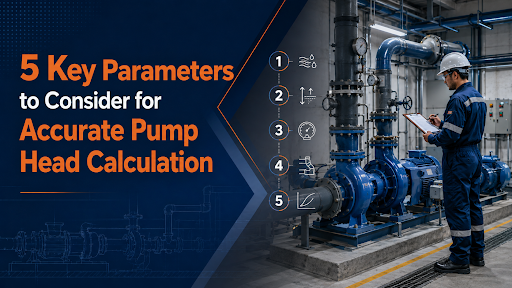
Accurate pump head calculation is essential to ensure a pump can move fluid through the complete system while meeting the required pressure at the point of use. It helps prevent under-sizing, excess energy use, and poor performance.
For a water pump supplier, understanding the complete hydraulic system is essential. Here are five parameters to assess before finalising pump selection.
1. Required Flow Rate
Start with the required flow rate, usually expressed in m³/h or LPM. Determine normal and peak demand, where multiple outlets or processes operate simultaneously. The pump should deliver the required flow at the calculated total head.
2. Required Terminal or Nozzle Pressure
Pressure at the most demanding terminal or nozzle is key. A system may have adequate flow but still underperform if discharge pressure is insufficient. Define the minimum pressure required at the hydraulically critical outlet and convert it into the corresponding head before selection.
3. Static or Elevation Head
Static head is the vertical difference between the relevant suction and discharge levels. If water must be lifted higher, this elevation contributes to total pump head. Account for actual water levels and the highest required discharge point, rather than just the pump’s location.
4. Pipe Length, Diameter and Friction Losses
Water loses energy as it travels through pipes. Friction loss depends on flow velocity, pipe diameter, pipe length, and pipe characteristics. Longer pipe runs and smaller diameters generally create greater losses. The calculation should cover every relevant suction and discharge section.
5. Fittings, Valves and Overall System Configuration
Elbows, tees, reducers, strainers, check valves and other components create additional pressure losses. These can be converted into equivalent pipe length or calculated as individual minor losses. The complete system should then be reviewed to identify the hydraulically critical point, typically the route requiring the highest total head.
Bringing these factors together gives the Total Dynamic Head (TDH) that the pump must overcome. A hydraulic assessment helps avoid an oversized pump or one that cannot meet operating conditions. VEMPL offers industrial pumps including end suction, split case, multi-stage, vertical turbine, and vertical inline pumps.
If you are evaluating an industrial pumping application, partnering with experienced industrial water pump suppliers in Mumbai can help translate your hydraulic calculations into the right pump selection. A reliable water pump supplier can also assess the complete system configuration and recommend a solution aligned with the application’s actual operating conditions.
With over 77 years of expertise in electromechanical engineering solutions, air compressors and industrial pumps from leading water pump manufacturers, VEMPL brings extensive experience to pumping requirements. For expert assistance, call +91 8976951701, +91 9819907445 or 022 43117133, or email marketing@vemc.co.in.
Frequently Asked Questions (FAQs)
1. What is pump head?
Pump head is the energy per unit weight that a pump adds to the fluid, expressed as metres of liquid.
2. Is pump head the same as pressure?
No. They are related but not identical. Head represents energy per unit weight, while pressure represents force per unit area.
3. Why is the hydraulically critical point important?
It identifies the route or outlet with the highest hydraulic demand, helping determine the head the pump must provide.
4. Can pipe diameter affect pump head?
Yes. Smaller diameters can increase velocity and friction losses, raising the required pump head.
5. Why should fittings and valves be included?
They create local pressure losses. Ignoring them can underestimate pump head and affect system performance.