
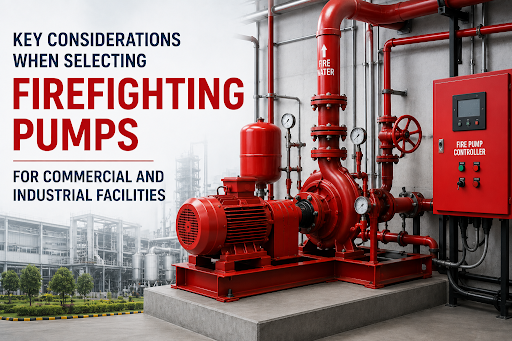
Fire protection is one of the most critical safety systems in any commercial or industrial facility. Whether it’s a manufacturing plant, warehouse, shopping mall, hospital, office complex, data center, or high-rise building, the effectiveness of the entire fire protection system depends on one essential component—the firefighting pump.
During a fire emergency, there is no room for equipment failure. A properly selected fire pump ensures that sprinkler systems, hydrants, hose reels, and other firefighting equipment receive the required water flow and pressure to control or extinguish the fire effectively.
However, selecting the right firefighting pump involves much more than choosing a pump with the desired capacity. Factors such as building size, hazard classification, water source, applicable fire safety standards, and long-term maintenance all play a crucial role.
Working with experienced Kirloskar firefighting pump dealers ensures that the pump is correctly selected, installed, commissioned, and maintained throughout its service life.
In this guide, we’ll discuss the key factors to consider when selecting firefighting pumps and explain why choosing the right supplier is just as important as choosing the right equipment.
Why Is Choosing the Right Firefighting Pump Important?
A fire pump is the heart of a fire protection system. Its primary function is to provide adequate water pressure and flow when the existing water supply cannot meet the system’s requirements.
If a fire pump is incorrectly selected, it can lead to:
- Insufficient water pressure during emergencies
- Inadequate water flow to sprinklers and hydrants
- Non-compliance with fire safety regulations
- Increased maintenance costs
- Reduced equipment life
- Failure of the fire protection system when it is needed most
Selecting the right pump helps ensure occupant safety, protects valuable assets, minimizes business interruption, and supports compliance with fire safety standards.
Key Factors to Consider When Selecting a Firefighting Pump
1. Determine the Required Flow Rate
The first step is calculating the water flow required for the facility.
The required flow depends on several factors, including:
- Building occupancy
- Total protected area
- Fire protection system design
- Number of hydrants and sprinklers
- Hazard classification
For example, a manufacturing facility handling combustible materials typically requires higher water flow than a commercial office building.
Proper hydraulic calculations ensure the pump delivers sufficient water during an emergency.
2. Calculate the Total Head (Pressure Requirement)
Besides flow rate, the pump must generate enough pressure to overcome:
- Building height
- Pipe friction losses
- Valve losses
- Elevation differences
- Required operating pressure at the most remote hydrant or sprinkler
A pump with insufficient head may fail to deliver water to upper floors or distant sections of the building.
Accurate pressure calculations are therefore essential during pump selection.
3. Evaluate the Available Water Source
The type and reliability of the available water source significantly influence pump selection.
Common water sources include:
- Underground water tanks
- Overhead storage tanks
- Municipal water supply
- Reservoirs
- Lakes or rivers
The pump configuration should match the available water source to ensure reliable operation during emergencies.
4. Understand the Hazard Classification
Different facilities face different levels of fire risk.
Typical hazard classifications include:
- Light Hazard – Offices, schools, hospitals
- Ordinary Hazard – Commercial buildings, warehouses
- Extra Hazard – Chemical plants, manufacturing facilities, refineries
Higher hazard occupancies generally require larger fire pumps capable of delivering greater flow and pressure.
5. Select the Appropriate Fire Pump Type
Different applications require different pump configurations.
End Suction Fire Pumps
End suction pumps are compact and economical, making them suitable for small to medium-sized commercial buildings.
Common applications include:
- Office buildings
- Schools
- Hotels
- Residential complexes
Horizontal Split Case Fire Pumps
Horizontal split case pumps are designed for high-capacity applications requiring continuous reliability.
They offer:
- High efficiency
- Easy maintenance
- Long service life
- Reliable performance
These pumps are widely used in:
- Shopping malls
- Industrial plants
- Airports
- Hospitals
- Large commercial complexes
Vertical Turbine Fire Pumps
Vertical turbine pumps are used when water is drawn from underground reservoirs, lakes, or deep wells.
They are ideal where the water level is below ground level.
Jockey Pumps
Jockey pumps maintain system pressure during normal operation.
Their purpose is to compensate for small pressure losses and prevent unnecessary starting of the main fire pump.
This extends equipment life and reduces maintenance.
Diesel Engine Driven Fire Pumps
Diesel engine-driven pumps provide backup operation during electrical power failures.
These pumps are commonly installed in facilities where uninterrupted fire protection is critical.
Complete Fire Pump Packages
Many modern projects prefer factory-assembled fire pump packages that simplify installation and improve reliability.
Common solutions include:
- KFE Fire Pumps
- FLD Fire Pump Sets
- Skid Mounted Fire Pump Systems
These integrated systems typically include:
- Main fire pump
- Jockey pump
- Diesel backup pump (where required)
- Control panels
- Base frame
- Piping accessories
Factory-tested packages help reduce installation time while ensuring dependable performance.
Fire Pump Selection Checklist
Before finalizing a firefighting pump, consider the following:
| Selection Criteria | Why It Matters |
| Required Flow Rate | Ensures adequate water supply during fire emergencies |
| Total Head | Delivers sufficient pressure throughout the system |
| Water Source | Determines the appropriate pump configuration |
| Hazard Classification | Matches the fire risk level of the facility |
| Applicable Standards | Ensures regulatory compliance |
| Pump Type | Optimizes performance for the application |
| Power Source | Provides reliable operation during emergencies |
| Future Expansion | Supports increased demand as the facility grows |
Importance of Compliance with Fire Safety Standards
Fire pumps should always be selected and installed in accordance with applicable fire protection standards and local regulations.
Compliance helps ensure:
- Reliable system performance
- Safety of occupants
- Regulatory approvals
- Reduced liability
- Long-term operational reliability
Working with experienced fire protection professionals ensures that the selected system meets project-specific requirements.
Why Choose an Authorized Kirloskar Fire Fighting Pump Dealer?
Selecting the right dealer is just as important as selecting the right pump.
Authorized Kirloskar fire fighting pump dealers provide complete technical support throughout the project lifecycle.
Their services typically include:
- Pump selection based on hydraulic calculations
- System design assistance
- Product recommendations
- Installation support
- Commissioning
- Performance testing
- Preventive maintenance
- Genuine Kirloskar spare parts
- Technical troubleshooting
- After-sales service
This ensures the fire protection system continues to perform reliably for years.
Maintenance Best Practices for Fire Pumps
Fire pumps remain idle for long periods and are expected to operate instantly during emergencies.
Routine maintenance is therefore essential.
Recommended practices include:
- Conduct weekly test runs.
- Inspect pump alignment and couplings.
- Check diesel engine fuel levels and battery condition.
- Verify controller operation.
- Inspect suction and discharge valves.
- Monitor system pressure.
- Test alarms and automatic start functions.
- Replace worn components using genuine spare parts.
Preventive maintenance significantly improves system reliability and extends equipment life.
Common Mistakes to Avoid When Selecting Fire Pumps
Avoid these common errors during project planning:
- Selecting pumps based only on capacity without hydraulic calculations.
- Ignoring future building expansion.
- Choosing incorrect pump configurations.
- Overlooking applicable fire safety standards.
- Purchasing from unauthorized suppliers.
- Neglecting long-term maintenance requirements.
Careful planning helps avoid costly modifications later.
Frequently Asked Questions (FAQs)
1. What is the purpose of a firefighting pump?
A firefighting pump supplies the required water flow and pressure to hydrants, sprinkler systems, and other fire protection equipment during an emergency.
2. Which fire pump is best for commercial buildings?
The best pump depends on the building’s flow requirements, pressure, water source, and fire protection system design. End suction, horizontal split case, and diesel engine-driven pumps are commonly used in commercial applications.
3. Why are Kirloskar fire pumps widely used?
Kirloskar fire pumps are recognized for their robust construction, proven hydraulic performance, wide product range, compliance with industry standards, and reliable after-sales support.
4. Do firefighting pumps require regular maintenance?
Yes. Fire pumps should undergo routine inspections, weekly test runs, and preventive maintenance to ensure they operate reliably during emergencies.
5. Why should I purchase from an authorized Kirloskar firefighting pump dealer?
Authorized dealers provide genuine Kirloskar products, expert technical guidance, factory-backed warranty, commissioning support, genuine spare parts, and dependable after-sales service.
6. Can fire pumps be customized for specific projects?
Yes. Fire pump systems can be configured based on building size, water source, hazard classification, applicable standards, and project-specific flow and pressure requirements.
Conclusion
A firefighting pump is far more than just another piece of equipment—it’s a critical component that safeguards lives, property, and business continuity. Choosing the right pump requires careful evaluation of flow rate, pressure requirements, water source, hazard classification, applicable standards, and future operational needs.
Whether you’re designing a new commercial building, upgrading an industrial facility, or expanding an existing fire protection system, partnering with experienced Kirloskar firefighting pump dealers ensures you receive the right solution backed by expert engineering, professional installation, and dependable after-sales support.
At Vijay Engineering & Machinery Co. (VEMPL), we offer a comprehensive range of Kirloskar firefighting pumps and complete fire pump solutions for commercial, industrial, institutional, and residential projects. Our team assists with system selection, installation, commissioning, testing, and maintenance to help you build a reliable fire protection system that performs when it matters most.